Thursday, October 15, 2026


Thursday, October 15, 2026
Mike Klein:
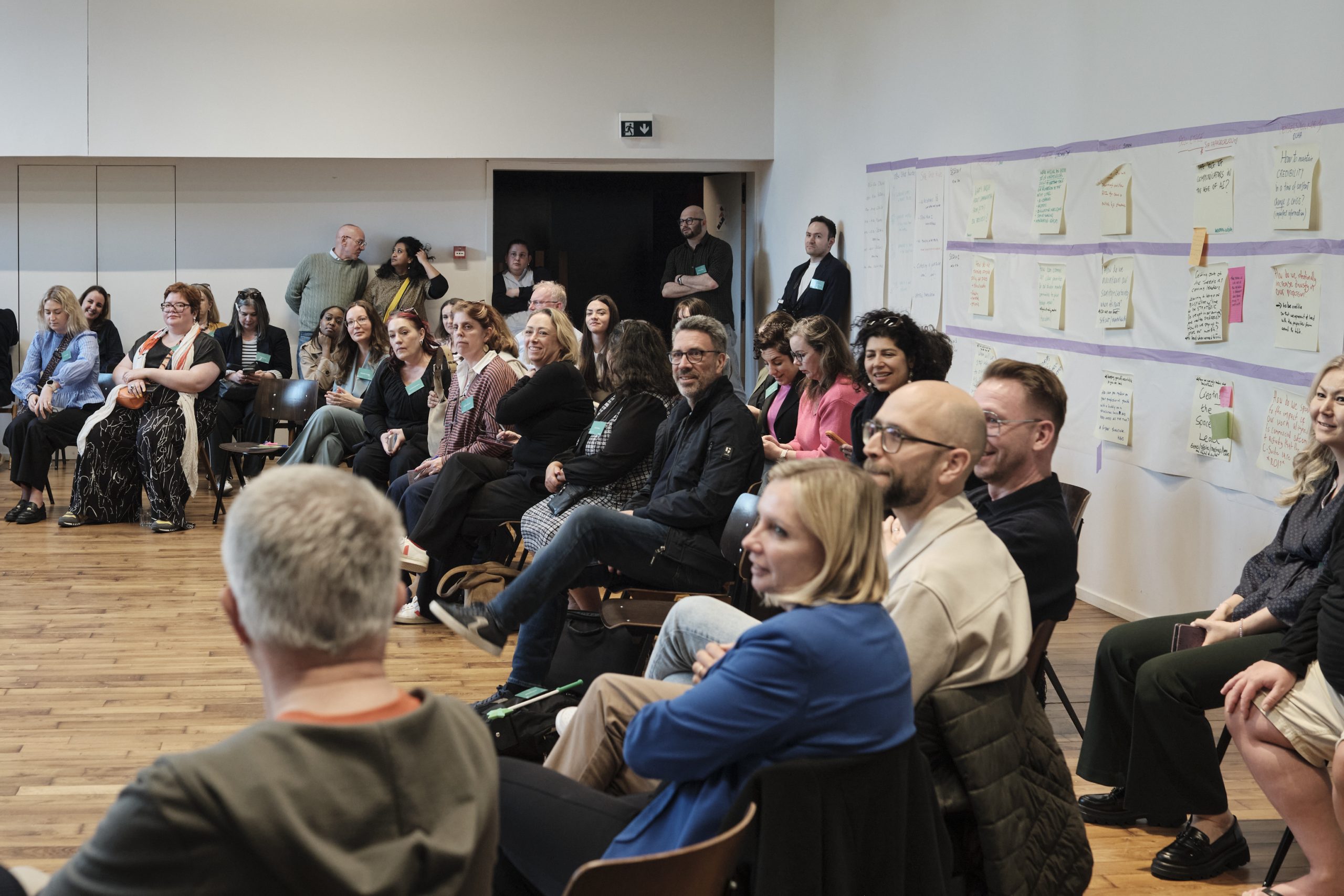
One hundred communication leaders. Five breakout areas. A stack of extra-large sticky notes, and one question: “The world is in crisis – what are communication leaders going to do about it?”
What happened? One of the best sets of conversations I’ve witnessed in my years of working in and around this profession.
The Communication Leadership Summit in Brussels, co-hosted by Strategic and IABC EMENA, ran as a fully open-space gathering – meaning participants built the agenda themselves on the morning of the event.
No keynotes.
No panels curated months in advance.
No safe, pre-set topics.
Facilitator Leen Schelfhout held the space with the kind of quiet authority that open-space facilitation demands, and the room did the rest.
What made this particular room unusual was its composition.
Roughly a third of attendees were senior corporate communication leaders from across Europe – with representation from Africa and North America as well.
About a third were independent consultants, most focused on internal communication. A third were Brussels-based public affairs and association communication professionals. And a number of global industry thought leaders were there to agitate things.
Four tribes. One room. Equal footing.
That mix matters. These groups don’t normally co-create an agenda together.
When they did, the sessions they chose revealed something important about where the profession actually stands – not where conference programs say it stands, but where practitioners feel it in their work every day.
And four themes dominated the discussion.
This isn’t a new problem. Communication professionals have been wrestling with their seat at the table, their perceived value, and their ability to demonstrate impact for as long as I can remember.
What struck me as different in Brussels wasn’t the problem itself – it was the ownership of it.
In session after session, practitioners weren’t asking someone else to fix this. They were asking what they personally needed to do differently.
Sessions on ROI and professional sanity put it plainly: don’t wait to be invited, break in.
Know the business.
Know the numbers.
Get certified, show the work, be unafraid of accountability, and educate your STEM-minded colleagues about what communication actually does.
These weren’t “bitch sessions.”
They were people working out what they need to do to own and fix their problems.
Credibility gaps are hard enough to close. They become significantly harder when practitioners are navigating them alone.
What surfaced repeatedly in Brussels was the cost of professional isolation – not just the personal toll, addressed directly in one session on “maintaining sanity and credibility” – but the operational cost of reinventing wheels that others have already built, lacking access to tools and frameworks that actually work, and having no one to reality-check decisions against before they’re made.
Another session on “buddy relationships and personal development” wasn’t a soft conversation. It was a structural argument: you need someone outside your organization who will challenge you and hold you accountable. Even in a specialized session for Brussels-based association comms pros that I attended, the shared realization about the level of disconnection in a single city teeming with hundreds of such specialists was sharp and profound.
Multiple sessions converged on a version of the same insight. The way communication has traditionally been measured and sold internally – volume of content, campaign activity, message reach – is not the language of business leadership.
The shift required is toward outcome framing and, increasingly, risk framing.
What happens to the business if we don’t communicate this effectively?
What’s the reputational exposure?
What’s the operational risk of misalignment?
The session on maintaining impact under diluted messages made this concrete: link communication outcomes to business success from the start and start baselining immediately, rather than trying to do it after the fact.
The Brussels public affairs session reinforced it: measure nuanced outcomes, not just outputs. When communication professionals speak in the language of business risk, the credibility conversation shifts.
A session on misinformation and disinformation session landed on something that applies well beyond crisis communication: trust is an outcome, not a starting condition. You build it deliberately, structurally, over time – or you find yourself trying to counter falsehoods with facts and wondering why it isn’t working.
Organizational network analysis came up explicitly as a tool for understanding who actually holds credibility with whom inside an organization. Relationship management, community structure, employee influencer identification – these aren’t soft skills. They are the infrastructure on which everything else depends.
Why did the Summit work – again?
Beyond these four themes, The Communication Leadership Summit again surfaced the full scope of what communication leadership looks like when practitioners own the agenda entirely.
A session on whether “today’s strategic communication is a patriarchal, colonial construct” drew serious energy and serious participants.
Mental health sat alongside measurement.
EU micro-influencer strategy sat alongside global misinformation risk.
None of this was incoherent. It reflected the actual breadth of what this profession encompasses – and the willingness of a diverse room to engage with all of it honestly.
The problems discussed in Brussels are not new. Credibility, isolation, measurement, trust – these have been on the agenda for years.
What was different was the urgency, and something harder to name but easier to feel: a sense that the profession is running out of patience with deferring these conversations and running out of time to address them gradually.
What I heard in Brussels was a profession that knows what its problems are, and are increasingly clear on what solving them requires.
That’s worth building on. And we’ll be building on it again very soon.
With thanks to Ruxandra-Laura Bosilca and Simon Cavendish of IABC EMENA, my publisher and business partner at Strategic, Orla Clancy, our room facilitators: Monique Zytnik, Olha Boiko, Michael Nord, Eduvie Martin; and sponsors AgencyX and RetoraLab for making the Communication Leadership Summit a phenomenal event.
+++
Mike Klein is Editor-in-Chief of Strategic, a Co-Founder of the Communication Leadership Summit, and a consultant, author, and speaker focused on internal communication and engagement.

© 2026 Stratpair Ltd., trading as Strategic. Registered in Ireland: 747736