Sunday, December 07, 2025


Sunday, December 07, 2025
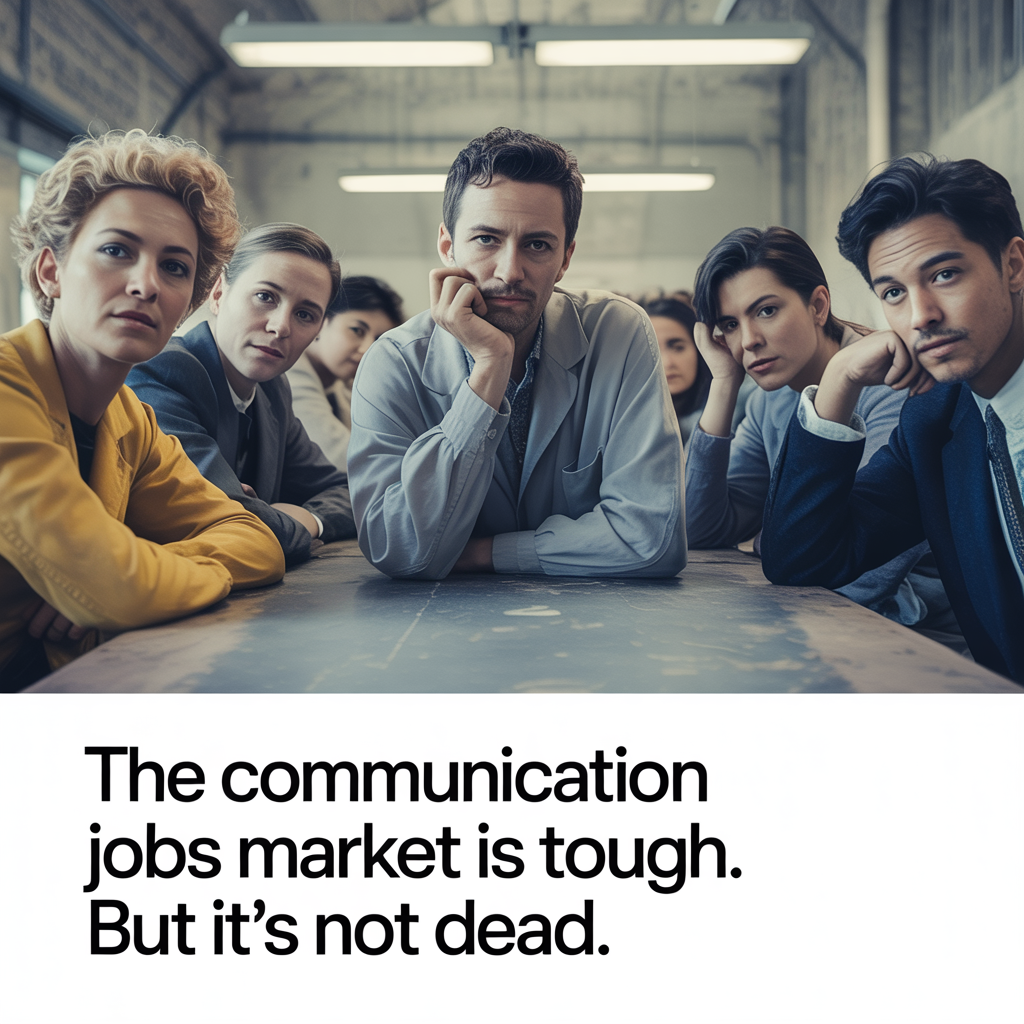
A conversation with recruitment market expert Lisa MacMillan confirms what many suspected about today’s market – while revealing some unexpected opportunities
by Mike Klein, Editor-In-Chief:
When I sat down with Lisa MacMillan, CEO of MacMillan Consulting, I expected to hear what most people in our field have been saying: “it’s tough out there.” What I didn’t expect was the level of detail about why it’s tough, and where the genuine opportunities might actually be hiding.
Lisa didn’t sugarcoat the reality. “It’s a very, very tough market,” she acknowledged upfront. But rather than stopping there, she mapped out the specific dynamics that are reshaping how communication professionals need to think about their careers.
Reputation Gets Real
One of the more interesting developments Lisa highlighted was the explicit recognition of reputation work. While many of us have always looked at reputation management as being part of our broader communications role, she’s seeing it become a specific requirement.
“Reputation is priceless and it needed at uncertain times,” she explained. “Boards need to know that they can be trusted, so communications comes in really importantly there.” The shift isn’t just semantic—it’s creating a wedge for professionals who can articulate their reputation experience explicitly rather than assuming it’s understood.
When I asked whether you need specific reputation credentials or if general communications experience suffices, Lisa was clear: “I think a combination of two, but I do think having that explicit reputation experience is really important.” For professionals who’ve been doing this work all along, it’s about reframing and positioning rather than starting from scratch.
Geography as Strategy
Lisa identified genuine growth in specific markets—UAE, Singapore, Amsterdam, and Brussels—which confirms what many of us have been hearing anecdotally. The catch is that these opportunities come with specific requirements.
For the Middle East markets, “more recently it has been a case that you need to be there on the ground or have some experience of that market,” she noted. But she also mentioned seeing flexible arrangements where professionals work remotely and travel every six weeks, suggesting the traditional expat model is evolving rather than disappearing entirely.
Singapore remains challenging for employment passes, but “it’s not impossible,” as Lisa put it. These aren’t broad opportunities, but they’re real ones for professionals willing to adapt their geographic expectations.
The AI Reality Check
Perhaps the most nuanced part of our conversation centered on AI’s impact. Lisa’s take confirmed what many have suspected: AI is reshaping the junior pipeline while potentially creating opportunities for strategic-level professionals.
“I don’t think it’s replacing anything from a comms role perspective because you still need the empathy and you still need the personal contact,” she said. But she also acknowledged working with graduates who are “desperately trying to get into the workplace and being limited.”
The opportunity wedge here is for professionals who can demonstrate AI fluency while maintaining human-centered skills. As Lisa noted, there’s growing value for those who can “navigate their senior leaders and show them what the pitfalls are” when it comes to AI implementation.
Portfolio Potential
Lisa highlighted the rise of portfolio careers and interim roles, which aligns with what many professionals are already experiencing. But her framing was more strategic than reactive: “It’s about people looking at their time and what projects they actually want to do.”
This isn’t just about making the best of a difficult situation—it’s about recognizing that hybrid, project-based work might actually offer advantages for certain professionals, particularly those in mid-career who value flexibility and variety.
Skills That Differentiate
When I pressed Lisa about how professionals should position themselves, her advice was practical rather than aspirational. “Learning to be really agile and adaptable” topped her list, followed by leveraging global experience and cultural understanding.
But she also emphasized AI literacy as a genuine differentiator: “Looking at how they can utilize AI into what they’re doing. I think that’s important as well.” The opportunity is for professionals who can bridge the gap between AI capabilities and strategic communication needs.
The Adjacent Advantage
One of the most actionable insights from our conversation was Lisa’s identification of adjacent roles where communication professionals are finding success: Chief of Staff positions, HR, operations, marketing, and data analytics.
“Bringing data insights into the fold” was particularly interesting—professionals who can combine communication skills with analytical capabilities are finding demand even in a tough market.
Near-Term Realities
Looking ahead to the next 6-18 months, Lisa was realistic about expectations. “People need to be very responsible for making sure organizations can see them and see what their ROI is,” she said, emphasizing visibility and demonstrable value.
She also predicted an uptick in interim roles and portfolio careers, suggesting that professionals who position themselves for this type of work might find more opportunities than those waiting for traditional full-time positions to materialize.
The Brussels and Amsterdam Factor
Lisa’s mention of activity in Amsterdam and Brussels, “particularly on professional services and consultancy,” provides a useful reality check. These aren’t boom markets, but they represent stability in an otherwise contracting landscape—worth noting for professionals with European flexibility.
Reading Between the Lines
What Lisa described wasn’t dramatically different from what many professionals have been experiencing, but her perspective provided useful specificity about where the actual opportunities exist. The market is indeed tough, but it’s not uniformly tough across all segments, geographies, and skill sets.
The professionals who seem to be navigating successfully are those who can explicitly articulate their reputation experience, demonstrate genuine AI fluency, maintain geographic flexibility, and prove strategic value through measurable outcomes.
Perhaps most importantly, Lisa emphasized that “the need for comms is more important than ever as we navigate these times.” The challenge isn’t that communication work is becoming irrelevant—it’s that the way we demonstrate and deliver that value is evolving faster than many anticipated.
Her advice to “keep relevant” and “keep visible” might sound basic, but in a market where traditional pathways are shifting, these fundamentals become more critical, not less.
The conversation confirmed much of what’s been circulating in our professional networks, but with enough specific detail to suggest where the genuine opportunities might be—for those prepared to adapt their approach accordingly.
+++
Mike Klein is Editor-in-Chief of Strategic and an IABC Fellow.
Lisa Jane MacMillan is a dedicated global headhunter and talent consultant with a passion for connecting top talent to transformative opportunities, bringing over 20 years of expertise across various industries.
Written by: Editor
You must be logged in to post a comment.
© 2025 Stratpair Ltd., trading as Strategic. Registered in Ireland: 747736



I really like the advice about reputation communications. I’d add that thought leadership communications is absolutely essential, and it’s sort of tied to the former.